Mountain stories
Some traditions are still lived, not remembered.
Behind every jar there is a kitchen with a fire in it, a hillside with animals on it, and a forest that was there before any of us. Here are three of them, told the way we would tell you if you were sitting with us.
Himachali Dham
Nobody eats alone at a dham.
Ask anyone from Himachal about the best meal they ever had, and there is a good chance they will describe a dham. Not a restaurant. Not a party hall. A courtyard or an open field, a fire, and the whole village sitting down together.
The cooks are called botis, and they start long before the guests are awake. Rice and pulses go into big brass vessels over wood fire, and the smoke gets into everything: the food, the tents, your clothes. You carry the smell home with you.
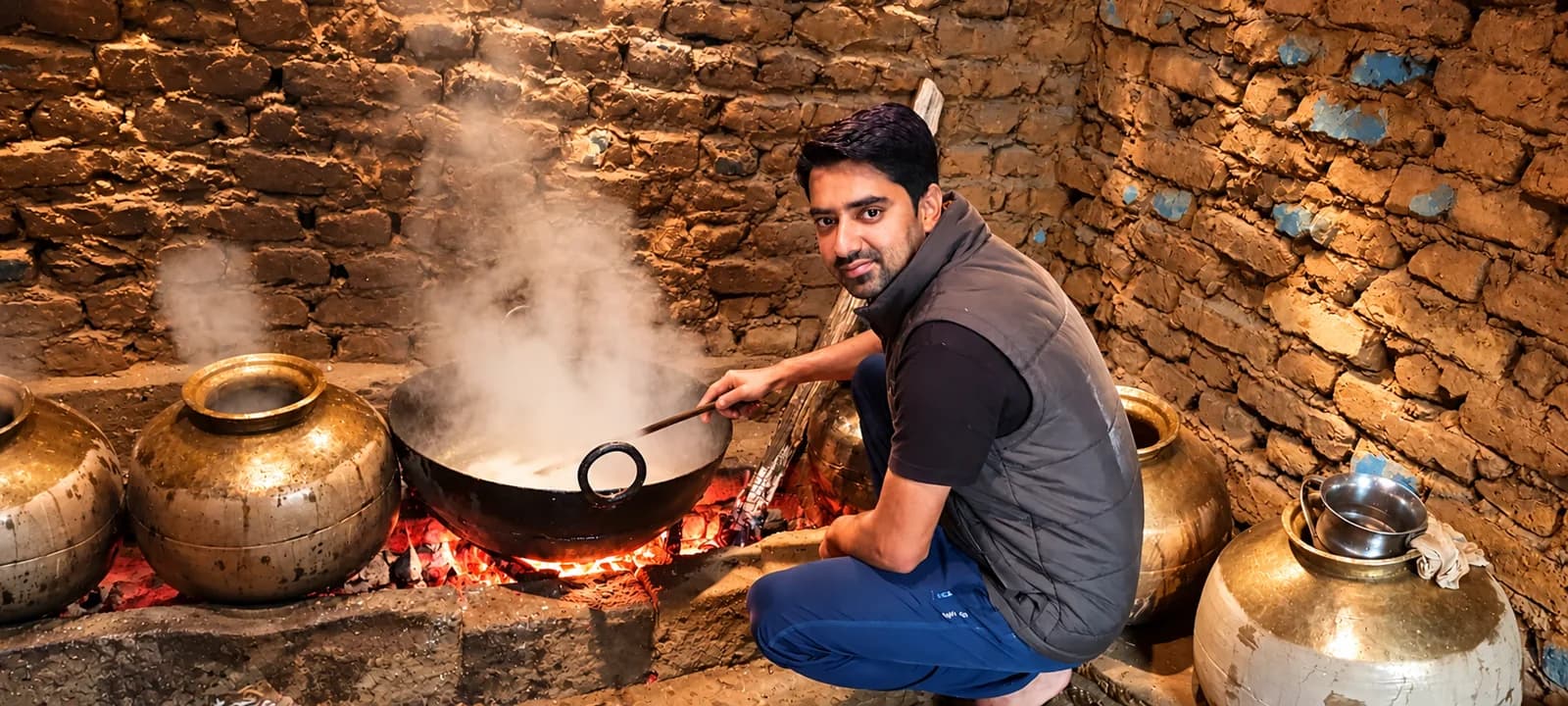
Everyone eats the same food, on the same ground, at the same time.
Then the guests sit in a long row on the ground, and leaf plates are laid out in front of them. Rice comes first, then the dals, then madra, a slow yoghurt gravy, then the sour khatta. Somebody comes along the row with another spoonful before your plate is empty. Somebody always does. Something sweet closes the meal.
It looks simple, and it is not. Nobody times it. The food is ready when it is ready, and the fire decides.
- Cooked by
- Botis, over wood fire
- Served
- In rows, on leaf plates
- On the leaf
- Rice, dals, madra, khatta, something sweet
- When
- Weddings, festivals, big family days
From usThis is the kind of food we keep in mind when we make ours. Slow, shared, and never rushed.
Gaddi Community
The road is part of the family.
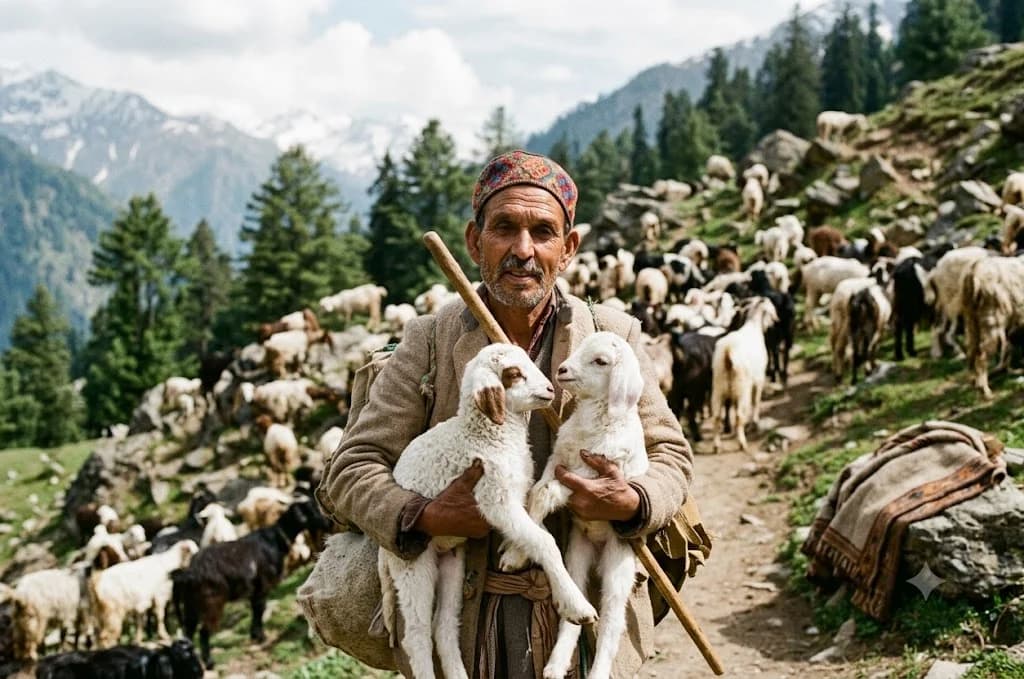
The Gaddis of Himachal have been walking with their flocks for longer than anyone can say. In summer they climb to the high meadows, where the snow has just left and the grass is soft. When the cold comes back, they walk down again: weeks on the road with sheep and goats, over passes, along rivers, through villages that know them by now.
It is not an easy life. The weather does not ask permission. A family can be away from home for months, and the animals always come first.
A lamb that is too tired to walk gets carried.
If you have ever seen a Gaddi shepherd carrying a tired lamb in his arms, or tucked into the fold of his woollen chola, you already understand the whole arrangement. Nobody is in a hurry. Everybody gets home.
The meadows they graze are the same ones the bees visit when the flowers open. Good grass, good milk, good honey. It all begins with the same few weeks of mountain summer.
- Who
- Shepherds of the Dhauladhar and Pir Panjal ranges
- The rhythm
- Up to the meadows in summer, down to the valleys in winter
- With them
- Sheep, goats and big dogs that guard the flock
- Wear
- The woollen chola, tied at the waist with a dora
From usWe work with food that comes from these hills. It seemed only fair to tell you about the people who keep them going.
Forests that shape the seasons
The forest was here first.
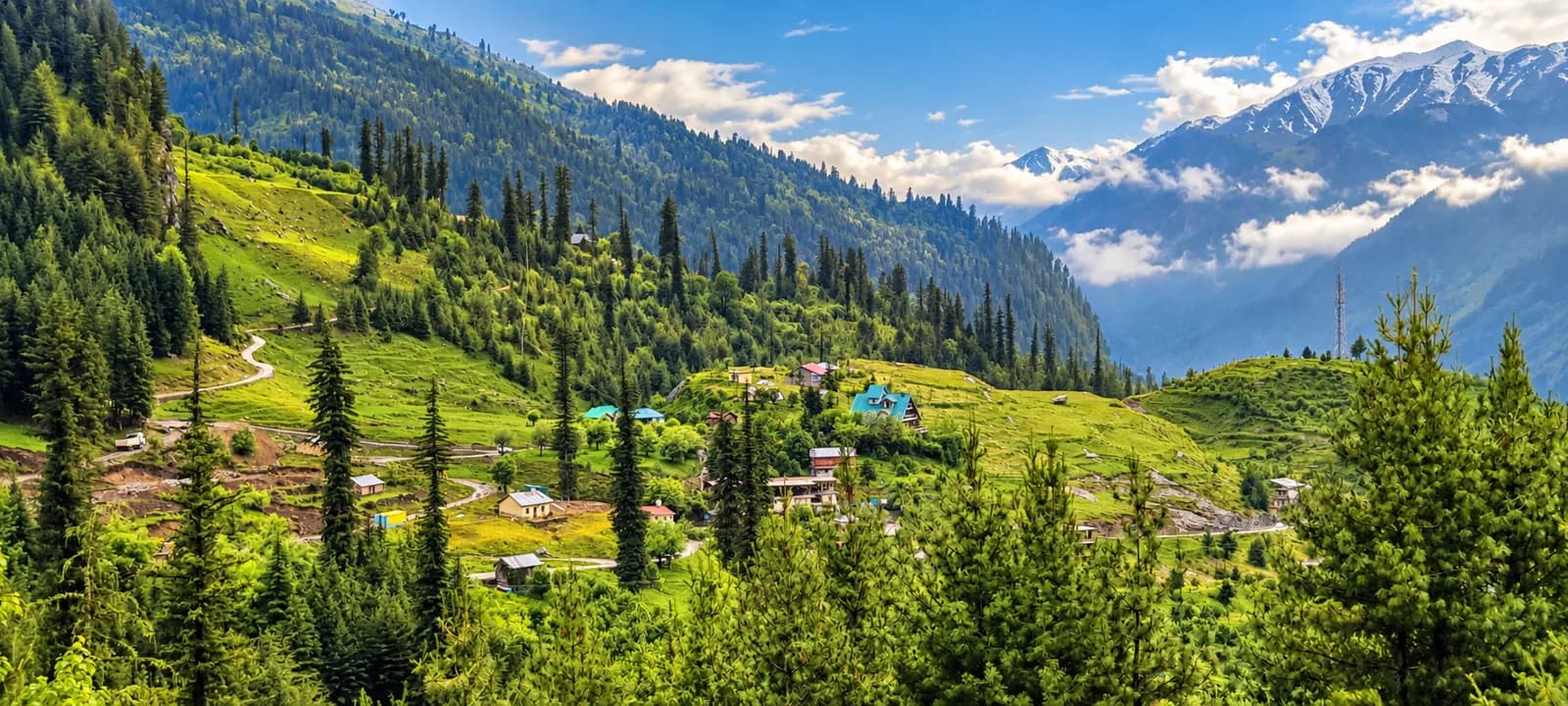
Above every village there is a forest, and every village knows it. It is where the firewood comes from, and the fodder, and the cold clean water that turns up at the tap on its own schedule.
Deodar and pine hold the snow all winter and let it go slowly in spring. Early in the morning, before the sun clears the ridge, everything is very quiet. You can hear the stream long before you see it.
Nobody writes that calendar down. Children pick it up by watching.
The year in the hills follows what happens up there. The snow melts, the meadows flower, the bees go to work, and then the berries ripen and somebody has to go and pick them by hand.
Some things on our shelves are only there for part of the year. That is the mountain keeping its own calendar, and we would rather wait for it than argue.
- It gives
- Water, firewood, fodder, shade
- It keeps time with
- Snowmelt, flowering, harvest
From usNothing here can be hurried. Honey, berries and ghee all arrive when the season is ready for them.
In the mountains, food still keeps the pace of the season.